Health and Safety Policy — Garden Clearance Finchley
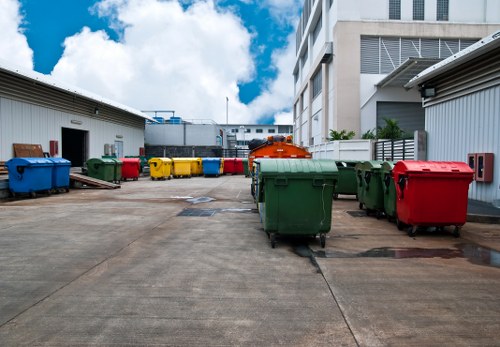 Garden Clearance Finchley is committed to protecting the health, safety and welfare of all employees, contractors and members of the public affected by our garden clearance and rubbish removal operations. This policy sets out the principles and arrangements that govern safe working, risk control and continuous improvement in our garden clearance and yard clearance services. The purpose is to reduce accidents, prevent ill health and ensure compliance with relevant health and safety good practice for a local clearance company operating across its service area.
Scope and objectives
Our policy applies to every task from initial site assessment to removal, transport and disposal of garden waste. Objectives include identifying and assessing hazards, providing appropriate training and equipment, and maintaining safe vehicles and plant. We aim to minimise manual handling injuries, control exposure to biological and chemical hazards, and ensure safe segregation of waste categories for recycling and disposal.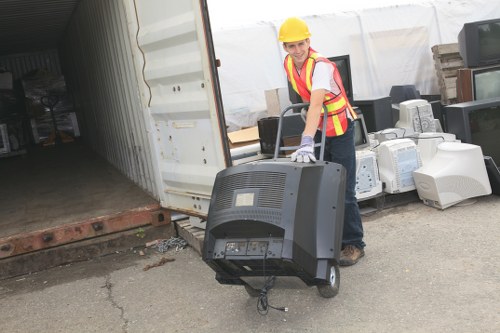
Responsibilities
Senior management has ultimate responsibility for health and safety and will allocate sufficient resources to implement this policy. Supervisors and crew leaders are responsible for on-site risk assessment, enforcement of controls and reporting incidents. Every worker is expected to cooperate, follow safe systems of work and report hazards. Contractors and temporary staff must comply with our requirements and provide evidence of competence where appropriate.Risk assessment is central to safe rubbish removal and garden clearance services. Prior to starting any work, a dynamic risk assessment will be carried out to identify site-specific risks such as trip hazards, unstable structures, deep compost heaps, contaminated soil, sharps and potential asbestos-containing materials in outbuildings. Control measures will include exclusion zones, signage, use of mechanical aids and tool selection to reduce manual handling. Records of significant risk assessments will be retained and reviewed regularly.
 Personal protective equipment (PPE) will be provided and maintained to meet the hazards identified: high-visibility clothing, gloves suitable for handling thorny and contaminated materials, protective footwear, eye protection and respiratory protection when dust or bioaerosol risks are present. PPE use is a last line of defense and will be supplemented by engineering controls and safe systems of work. Training in the correct use, inspection and storage of PPE is mandatory.
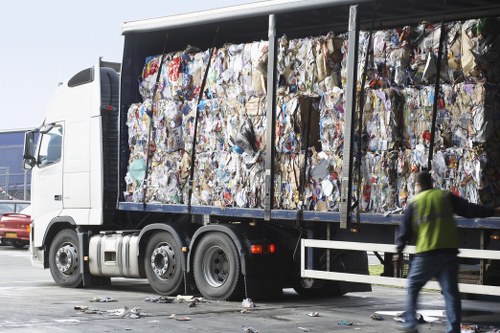
Safe use of tools, machinery and vehicles is mandatory. All powered tools and chippers will be subject to pre-use checks, periodic maintenance and safe guarding. Drivers and operatives will follow safe loading limits for vans and skip lorries and ensure secure securing of loads to prevent shifting during transit. Reversing aids, banksman procedures and vehicle maintenance records will be maintained to reduce vehicle-related incidents during domestic and commercial garden clearances.
 Manual handling controls focus on reducing strain and musculoskeletal injury. Team lifts, mechanical lifting aids, trolley use and best-practice lifting techniques are required. Work tasks will be planned to avoid prolonged repetitive tasks and to rotate duties where possible. Health surveillance and fitness to work are considered where tasks demand particular physical capability.
Waste segregation and environmental controls are part of safe garden waste removal. Green waste, timber, metals and hazardous items such as pesticides or asbestos fragments will be segregated and handled per regulatory and environmental good practice. Spill kits and containment measures will be available for liquid wastes, and operatives will be trained in preventing contamination to soil and watercourses when clearing gardens and external spaces.
Training, incident reporting and continuous improvement
Training is provided for induction, task-specific skills (chainsaw, chipping, safe use of hedgetrimmers) and emergency procedures. All staff receive instruction on manual handling, lone working protocols and biologically contaminated waste. Incident reporting procedures require immediate notification, documentation of near-misses and investigation to identify root causes and corrective actions. Outcomes feed into regular reviews of our health and safety arrangements.Emergency procedures and first aid
Emergency response plans are in place for injuries, fire, dangerous discoveries and environmental incidents. First aid kits and trained first-aiders will be available on-site or carried in vehicles, and operatives know how to summon further emergency assistance. We maintain a clear policy on reporting notifiable incidents in accordance with applicable standards.Monitoring, audit and review ensure the policy remains effective. Routine site inspections, vehicle checks, PPE audits and health and safety meetings are scheduled. Performance indicators such as accident frequency, near-miss trends and completion of training are used to measure effectiveness. The policy is reviewed at least annually or whenever significant changes in operations occur.
Summary of commitments:
- Provide a safe working environment and reduce risks from garden clearance and rubbish removal activities.
- Ensure competent personnel, appropriate training and suitable PPE.
- Implement robust risk assessment, emergency response and waste segregation procedures.